


Scotch Thistle
Scotch thistle (Onopordum acanthium) is an erect, spiny annual or biennial herb that forms dense stands in fertile, temperate, winter‑rainfall areas and reduces pasture productivity and access.
The Onopordum weed species covers variants: Scotch Thistle, Heraldic Thistle, Cotton Thistle, Woolly Thistle, Cardo-bastardo, Stemless Thistle, Horse Thistle, Stemless Onopordon, Illyrian Thistle
History
Introduced from Europe in the 1800s as an ornamental and hedge plant, Scotch thistle naturalised rapidly in southern Australia and was recorded as a weed in Victoria by the mid‑19th century.
Key phases and drivers of invasion
Early introduction and establishment through deliberate planting and contaminated seed and soil.
Rapid spread driven by extremely high seed production (individual plants commonly produce up to 20,000 seeds) and seed transport in wool, hay, machinery and on stock.
Disturbance and cultivation exposing buried seedbank and creating germination opportunities, with two main germination pulses in late summer–autumn and late winter–spring.
Persistence aided by seed survival through animal gut passage and survival of buried seed that germinates when returned to the surface.
Economic impact
Scotch Thistle imposes substantial and long‑term economic costs in Australia through lost agricultural productivity, degrades pastures, reduces stocking rates, contaminates hay and wool, injures stock and workers, increases control costs and can lower property values; control is costly because long‑term, repeated management is required to prevent seed set and deplete the seedbank
Noxious weeds, including Scotch Thistle and other Weeds of National Significance (WONS), contribute to an estimated total cost to Australia of about $5 billion per year, covering agricultural and environmental damage plus control expenses.
Scotch thistle is a widespread agricultural weed listed in state statutory noxious weed schedules in multiple jurisdictions and is covered by national best‑practice management guidance, though it is not one of the original core WONS species commonly highlighted in national lists
Broader economic consequences
Increases wildfire hazard and can raise emergency‑management and insurance costs in invaded landscapes; it also degrades biodiversity and ecosystem services with indirect economic consequences for tourism, recreation and natural‑resource values.
Growth & Lifcycle
Life form: annual to biennial herb; rosette stage followed by an erect flowering stem to about 1–2 m tall.
Reproduction: reproduces mainly by seed; can also regenerate from fresh root fragments under cultivation.
Phenology: flowers in late spring–summer; seeds present late spring–autumn with germination peaks in late summer–autumn and late winter–spring; seedlings of varying ages commonly coexist in infestations.
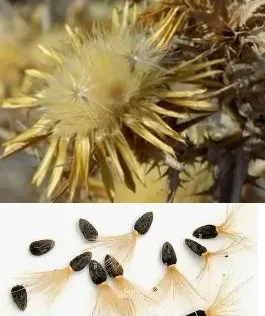
Seeds of scotch thistle are 4 to 5mm long, grey with dark mottling and are attached to a pappus (parachute) of toothed hairs or bristles up to twice as long as the seed. Extremely high seed production (individual plants commonly produce up to 20,000 seeds).
Seedbank longevity: seeds persist for at least 5+ years when buried and germinate when soil is disturbed, with studies and control programs reporting viable buried seed for 20-30 years and requiring at least five years of preventing seed set to substantially reduce populations
Management and Control
Effective control demands sustained, integrated measures with long‑term programs combining prevention, cultural, mechanical, chemical and biological methods, follow‑up and community coordination, prioritising removal of outlying plants to prevent seed spread and sustained follow‑up to deplete the seedbank
Weeds of National Significance (WONS) - NO, however is a widespread agricultural weed listed in state statutory noxious weed schedules in multiple jurisdictions and is covered by national best‑practice management guidance, though it is not one of the original core WONS species commonly highlighted in national lists
High seedbank longevity (20-30 years) and prolific seed production (20,000 seeds) mean control is ongoing at landscape scale. It can take 5 to 8 years of ongoing management to deplete the seed bank.
Prevention and early detection
Surveillance on property boundaries, roadsides and high‑risk paddocks; map and treat satellite infestations first to prevent reinvasion.
Hygiene: clean machinery, vehicles, animal fleece, hay and gravel to avoid seed movement between properties.
Cultural control
Maintain competitive pasture through improved grazing management, fertiliser and pasture renovation to reduce open niches for thistle seedlings.
Timed grazing: strategic grazing of rosettes can weaken plants before seed set but must be combined with other controls because spines reduce grazing efficacy.
Chemical control
Targeted herbicide application to rosette and bolting stages gives the best results; use recommended selective products and rates from your state authority and apply at the correct phenological stage for maximal uptake.
Follow‑up spraying is normally required because seedbanks produce new cohorts for several years
Non-chemical control
Physical control: Hand pulling is only possible with small plants and seedlings, normally when the soil is damp and soft allowing easy removal.
Mechanical control
Spot pulling or digging of rosettes and young plants before flowering; ensure removal of the whole root crown to prevent regrowth.
Slashing or mowing can reduce seed set when timed just before flowering, but chopped florets may still set seed so follow‑up is essential or hand remove florets
Biological control: options have been investigated for thistles; specific agents (seed‑feeding insects and rust pathogens) can reduce seed production and competitiveness as part of an area‑wide program, but they are not a sole solution and must be integrated with other tactics.
Seedbank management and follow‑up
Long‑term commitment: buried seed can remain viable for many years; expect to monitor and treat sites annually for multiple years to exhaust the seedbank and prevent re‑invasion.
Prevent seed set in every season until the seedbank is demonstrably reduced; treat late‑season survivors and volunteers promptly.
Area‑wide coordination
Neighbour collaboration: coordinate timing and methods with adjoining landholders and local authorities to treat corridors and prevent reinfestation along roads and waterways.
Record keeping: map treatments, flowering times and follow‑up outcomes to optimise timing and cost‑effectiveness.
Practical sequence for a property control plan
Survey and map infestations; prioritise outliers and transport corridors.
Treat prioritized plants (pull/dig or herbicide at rosette/bolting stage) and apply biological controls where available and appropriate.
Restore competitive vegetation and apply grazing management to suppress seedlings.
Conduct annual monitoring and follow‑up treatments for several years until seedbank risk is low.

Links to further information
Click here to send a request to add a new link
Videos - Control Methods
Videos - General Info
Government Information
**Page Information from various sources within the links above
PC, Device and phone app
iNaturalist & WeedScan - more info
General Information
Community Management
Scotch Thistle
Onopordum acanthium
Quick Navigation
Quick Identification Guide
Scotch thistle is an erect, spiny biennial herb that forms dense stands in fertile, temperate areas. It includes several variants: Heraldic Thistle, Cotton Thistle, Woolly Thistle, and others.
History
Introduced from Europe in the 1800s as an ornamental and hedge plant, Scotch thistle naturalized rapidly in southern Australia and was recorded as a weed in Victoria by the mid-19th century. Its success is driven by extremely high seed production and multiple germination windows throughout the year.
Why Control is Critical
Economic Impact
Scotch thistle imposes substantial economic costs through:
- Lost productivity: Degrades pastures and reduces stocking rates
- Contamination: Contaminates hay and wool, reducing market value
- Injury: Spines injure stock and farm workers
- Control costs: Long-term management requires sustained investment
- Property values: Heavy infestations can lower land values
National cost: Noxious weeds, including Scotch thistle, contribute an estimated $5 billion per year to Australia in agricultural and environmental damage plus control expenses.
Environmental Impact
- Increases wildfire hazard in dry periods
- Degrades biodiversity and ecosystem services
- Forms dense stands that exclude native species
- Affects tourism and recreation values
Take Action Now - Your 5-Step Plan
Walk your property, focusing on boundaries, roadsides, and disturbed areas. Map all infestations. Prioritize outlying plants to prevent spread.
Control is most effective on rosettes and young plants before flowering. Check plants weekly during growing season.
Small infestations: hand pull or dig (wear gloves!). Larger areas: herbicide application at rosette stage. See detailed methods below.
This is critical! Even one plant can produce 20,000 seeds. Remove or spray before flowering. Monitor late-season survivors.
Seeds remain viable for 20-30 years. Plan for 5-8 years of annual monitoring and treatment to deplete the seedbank.
Control Methods Comparison
Chemical Control
High EffectivenessBest for: Large infestations, rosette and bolting stages
Method: Apply selective herbicides at correct growth stage (rosette or early bolting) for maximum uptake. Consult state authority for recommended products and rates.
Pros: Effective on large areas, kills root system
Cons: Ongoing cost, requires expertise, follow-up needed
Cost: $$-$$$
Manual Removal (Hand Pulling/Digging)
High EffectivenessBest for: Small infestations, seedlings, rosettes in soft soil
Method: Wear heavy gloves. Remove entire root crown to prevent regrowth. Best when soil is damp.
Pros: No chemicals, immediate removal, good for small numbers
Cons: Labor intensive, impractical for large areas, painful spines
Cost: $ (time only)
Mowing/Slashing
Medium EffectivenessBest for: Emergency control to reduce seed set
Method: Cut just before flowering. Remove cut flower heads as they may still set seed. Follow up with other methods.
Pros: Can cover large areas, reduces seed production
Cons: Plants may regrow, chopped flowers can still seed, not a long-term solution
Cost: $$
Pasture Management
Medium EffectivenessBest for: Prevention and reducing seedling establishment
Method: Maintain competitive pasture through grazing management and fertilizer. Strategic grazing of rosettes can weaken plants.
Pros: Preventative, improves overall land condition
Cons: Spines reduce grazing effectiveness, must combine with other methods
Cost: $-$$
Biological Control
Low-Medium EffectivenessBest for: Area-wide programs as part of integrated approach
Method: Seed-feeding insects and rust pathogens reduce seed production and plant vigor.
Pros: Ongoing control, no direct cost once established
Cons: Not a sole solution, slow action, variable effectiveness
Cost: $ (establishment)
Seasonal Action Calendar
🍂 Autumn (Mar-May)
Action: Monitor for germination pulse. Treat rosettes with herbicide or hand pull while soil is soft. Good time for surveying and mapping.
❄️ Winter (Jun-Aug)
Action: Second germination pulse in late winter. Continue monitoring and treating rosettes. Plan spring control strategy.
🌸 Spring (Sep-Nov)
Action: CRITICAL PERIOD. Plants bolt and flower. Spray rosettes and bolting plants immediately. Hand remove any flowering plants to prevent seed set.
☀️ Summer (Dec-Feb)
Action: Seeds mature and disperse. Remove any survivors urgently. Late summer germination begins. Clean equipment and vehicles to prevent spread.
Resources & Support
Download Resources
Print-friendly guides for field reference
📄 Quick ID Guide (PDF) 📋 Control Checklist (PDF) 📅 Seasonal Calendar (PDF)💡 Suggest a Resource
Know of a helpful guide, video, or tool? Help us improve this page by suggesting additional resources.
Submit Resource